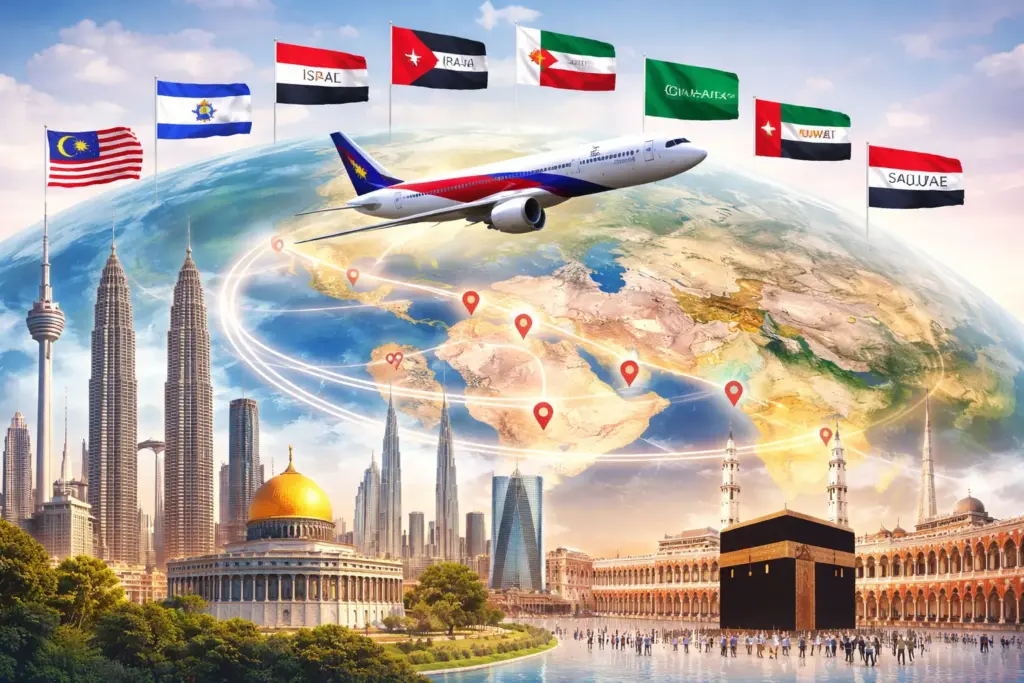
As tensions rise in the Middle East, air travel has been severely affected around the world, causing major delays and cancellations. Many airlines have had to cancel, change the route of, or delay thousands of flights, especially those that fly to and from the Middle East. In light of these problems, Malaysia has become an important partner in a joint effort with Middle Eastern countries and international aviation regulators to make travel safer again. This joint effort is meant to make sure that air travel stays safe and efficient, even though there are still conflicts in the region.
Malaysia’s Part in Coordinating Regional Aviation
Malaysia has shown that it is committed to working with other countries in the region and around the world to make air travel safe and secure again during this time of crisis. Malaysia’s aviation authorities, working with the International Civil Aviation Organization (ICAO), have taken steps to deal with the operational risks that come with closing off some airspace regions because of geopolitical tensions.
Malaysia is one of the most important countries in Southeast Asia. It has worked closely with its neighbours in the Middle East, such as Israel, Iraq, Jordan, Qatar, Bahrain, Kuwait, the UAE, Saudi Arabia, and Syria. Together, these countries are working to deal with the problems, lower the risks, and make sure that safe air travel continues in the areas that have been affected.

Malaysia is dealing with the airspace crisis by keeping an eye on flight paths in real time, rerouting planes to avoid high-risk areas, and sending operational advisories to airlines. Malaysia has been a key player in making things less confusing for both passengers and airlines by making sure that governments and aviation regulators talk to each other in a clear and open way.
Malaysia Airlines Stops Flying Because of Closed Airspace
Malaysia Airlines stopped flying to the Middle East on several important routes from February 28 to March 1, 2026, as a safety measure. Flights from Kuala Lumpur to Doha, Jeddah, and Madinah were stopped for a short time because of restrictions on airspace and concerns about security.
The airline didn’t do anything wrong to cause these suspensions. They had to happen because air corridors that are considered high-risk because of ongoing conflicts were closed. Countries like Israel, Iraq, and Iran put partial or full restrictions on airspace, and Malaysia Airlines decided to stop flying as a safety measure in line with international aviation safety standards.
Malaysia Airlines has told its customers that the suspensions were only temporary and that the airline was keeping an eye on the situation. The choice to stop some flights was made to put the safety and security of passengers first, rather than risk operating in conditions that were unclear and possibly dangerous.
Help for passengers and travel options that are flexible
Malaysia Airlines worked hard to help passengers who were affected by these suspensions, knowing how hard they would be. The airline took the initiative to contact people whose flights were affected and offered them a variety of flexible travel options. These included the option to rebook on different travel dates, change routes through other international hubs, or get full refunds according to the airline’s rules.
Malaysia Airlines also stressed how important it was for passengers to keep their contact information up to date in the airline’s booking management system. This way, they could get real-time updates about any changes to their flights. The airline’s Global Contact Center was still open for people who needed help with rebooking or had questions about their travel.
Flights were rerouted, and long-haul operations continued.
Even though they were suspended, Malaysia Airlines still flies long-haul flights to European cities like London Heathrow and Paris Charles de Gaulle. But these flights have been changed so they don’t go through the Middle East’s restricted airspace. The airline has put passenger safety first and made sure that flights between Asia and Europe are still possible, even though rerouting does add time and fuel to flights.
Not just one airline is having to change its flight paths to avoid areas of conflict; all airlines in the region are having to do the same. This has caused more planes to fly in nearby airspaces, which has caused delays and congestion that go beyond the area of conflict. Because of these necessary detours, passengers flying to and from Europe may have longer trips and small changes to their flight schedules.

The Bigger Effect on Regional Hubs
The ongoing airspace crisis has affected major regional airports in the Middle East, such as those in Dubai, Tel Aviv, Tehran, and other important hubs. These problems have caused a backlog of flights and delays that affect not only airlines that fly in the Middle East but also those that fly to and from other continents.
As airspace in the area is changed, flights between Asia, Europe, and North America have to take longer routes. This not only uses more fuel, but it also puts more strain on airlines’ operations. Airports in the Middle East are getting busier, which makes the already difficult situation caused by airspace closures even worse.
Making sure that aviation is safe and follows the rules
To deal with the safety issues caused by these airspace disruptions, Malaysia’s aviation regulators have sent strict safety warnings to airlines that fly near the affected areas. This ongoing communication with international regulators, including those in Europe, makes sure that airlines are following the most recent safety rules and following the most recent advice on safe flight paths.
Airlines are always checking the level of risk and taking the right steps to keep passengers informed. This includes letting people know about any possible delays, rerouting options, or changes to flight schedules. Putting safety and clear communication first has been very important for keeping passengers’ trust and making sure that air travel stays as safe as possible during these uncertain times.
The Bigger Picture: A Global Problem in Aviation
The geopolitical problems in the Middle East show how interconnected global aviation networks are. The Middle East is an important transit hub, and problems in this area always have an impact on the schedules of international flights, the movement of passengers, and the ability of airlines around the world to do their jobs. As countries in Asia, Europe, and North America change their flight paths to stay away from dangerous areas, the effects are felt throughout the aviation industry.
Airlines are under financial pressure because they have to pay for more fuel, reschedule crews, and make up for delays and cancellations. These are in addition to the operational problems they are having. The ongoing geopolitical situation makes these financial problems even worse.
What travellers should know
Travellers who are going to or through the Middle East during this time of rising tensions should stay up to date and be ready for anything. People who are travelling should:
- Check the status of their flights with their airlines on a regular basis.
- Keep an eye on official warnings from both the government and the airlines.
- Check connections and travel plans
- Keep your travel papers and contact information up to date.
During times of geopolitical uncertainty, being flexible is very important. Staying informed will help passengers deal with these problems better.
Conclusion: Striving for Stability
The situation is still changing, but the work together by Malaysia, Middle Eastern governments, and international aviation authorities has helped make air travel a little more stable. The aviation industry is trying to lessen the effects of the crisis and make sure that passengers can still travel safely by focusing on safety, clear communication, and working together to solve problems. Even though there are still problems, this united front shows how important it is for countries to work together to keep the world connected.